Most Long Island homeowners do not think much about their roof until something goes wrong. That is completely understandable. A roof that is doing its job asks for nothing, which makes it easy to take for granted until a stain appears on the ceiling, shingles start turning up in the yard, or a neighbor mentions that your roof looks different from the street. By the time any of those things happen, the underlying situation has usually been developing for a while.
Knowing when you should replace your roof is one of the more valuable pieces of homeownership knowledge you can have. Replace too early and you spend money you did not need to spend. Replace too late and you face mounting repair costs, potential interior damage, and an emergency situation that forces a decision under pressure rather than on your own terms. At Ready Roof, we work with Nassau and Suffolk County homeowners every day who are trying to answer this exact question, and we have built our reputation on giving honest, thorough assessments rather than steering people toward whichever answer benefits us most. This guide covers the five situations that most reliably signal it is time to stop repairing and start replacing.
Why Timing a Roof Replacement Correctly Matters on Long Island
Long Island’s climate is genuinely demanding on roofing systems. Nor’easters deliver heavy snow loads and powerful winds. Late summer and fall bring tropical storm remnants with intense rainfall. The freeze-thaw cycling through winter months stresses shingles, flashing, and underlayment repeatedly over decades. A roof that might limp along for another few years in a milder climate can deteriorate quickly here once it crosses a certain threshold of wear.
That context matters when you are evaluating your roof’s condition. The question of when should you replace your roof is not just about what the roof looks like today. It is about whether it can handle what Long Island weather will throw at it next season, and the season after that. A roof that passes visual inspection in July can fail catastrophically in January. Getting ahead of that scenario rather than reacting to it is what separates a planned, budgeted replacement from an emergency situation.
Don’t wait for a leak to find a fix. Visit our homepage to see how we keep local families dry and safe.
Situation 1: Your Roof Has Reached or Exceeded Its Expected Lifespan
Age is the single most reliable predictor of when a roof needs to be replaced, and it is the first thing we assess during any inspection. Asphalt shingles, which cover the vast majority of residential homes across Long Island, are designed to last between 20 and 30 years depending on the product quality and the conditions they have been subjected to. Architectural or dimensional shingles sit at the higher end of that range. Basic three-tab shingles typically land toward the lower end.
If your roof is approaching 20 years old and you are experiencing any issues at all, the answer to when should you replace your roof is almost always now or very soon. If it has exceeded 25 years, proactive replacement is the responsible choice even if the roof appears superficially intact. The materials at this stage are compromised in ways that are not always visible from the ground. The granule coating that protects shingles from UV degradation has thinned. The asphalt layer has become brittle and less flexible. The sealant strips that bond shingles together through wind events have weakened. These are internal failures that a professional inspection can detect but that homeowners rarely notice until a storm reveals them.
One practical tip: check your home improvement records or previous inspection reports if you have them. Many homeowners do not know exactly when their roof was last replaced, particularly if they purchased the home from a previous owner. If you cannot verify the age of your roof, a professional inspection can often estimate it based on shingle condition, granule loss, and other physical characteristics.
Situation 2: Widespread Shingle Deterioration Across Multiple Sections
There is an important distinction between damage that is localized, meaning confined to a specific area with a specific cause, and deterioration that is systemic, meaning spread broadly across the roof surface. A handful of shingles dislodged by a single storm event is a repair situation. Shingles across multiple roof sections that are curling at the edges, cupping upward at the corners, developing cracks, or losing significant granule coverage are telling a different story.
Curling and cupping are particularly telling signs. Both indicate that the shingles have undergone significant thermal cycling and moisture exposure and have lost their original flexibility. Curled shingles cannot lay flat against the roof deck, which means they cannot form the overlapping water-shedding barrier they are designed to create. Wind can catch them. Rain can work underneath them. And once shingles begin curling in one section, neighboring sections are typically not far behind.
Granule loss is equally significant. The mineral granules embedded in the surface of asphalt shingles are what protect the asphalt layer from UV radiation. Once that coating thins enough, the asphalt degrades rapidly and shingles become brittle and prone to cracking. You can often spot granule loss by looking at the granule accumulation in your gutters or at the base of your downspouts. Heavy granule deposits there after rain events are a reliable indicator that your shingles are shedding their protective layer.
Situation 3: Active Leaks Combined With Compromised Decking or Underlayment
A roof leak is always worth taking seriously, but not every leak automatically answers the question of when should you replace your roof. What matters is where the water has gone and what it has done once it got past the outer surface. A leak that has been caught quickly and is limited to the shingle layer is often a repair situation. A leak that has penetrated through the underlayment and reached the roof decking is a different matter entirely.
Roof decking that has been exposed to moisture for any significant period of time develops rot, loses its structural integrity, and cannot safely support new roofing materials. Soft or spongy areas on the roof surface, visible from above during an inspection, indicate that the decking beneath has been compromised. Installing new shingles over rotted decking is not a solution. It simply covers the problem while it continues progressing, and the new shingles will not perform or last as designed without a sound substrate beneath them.
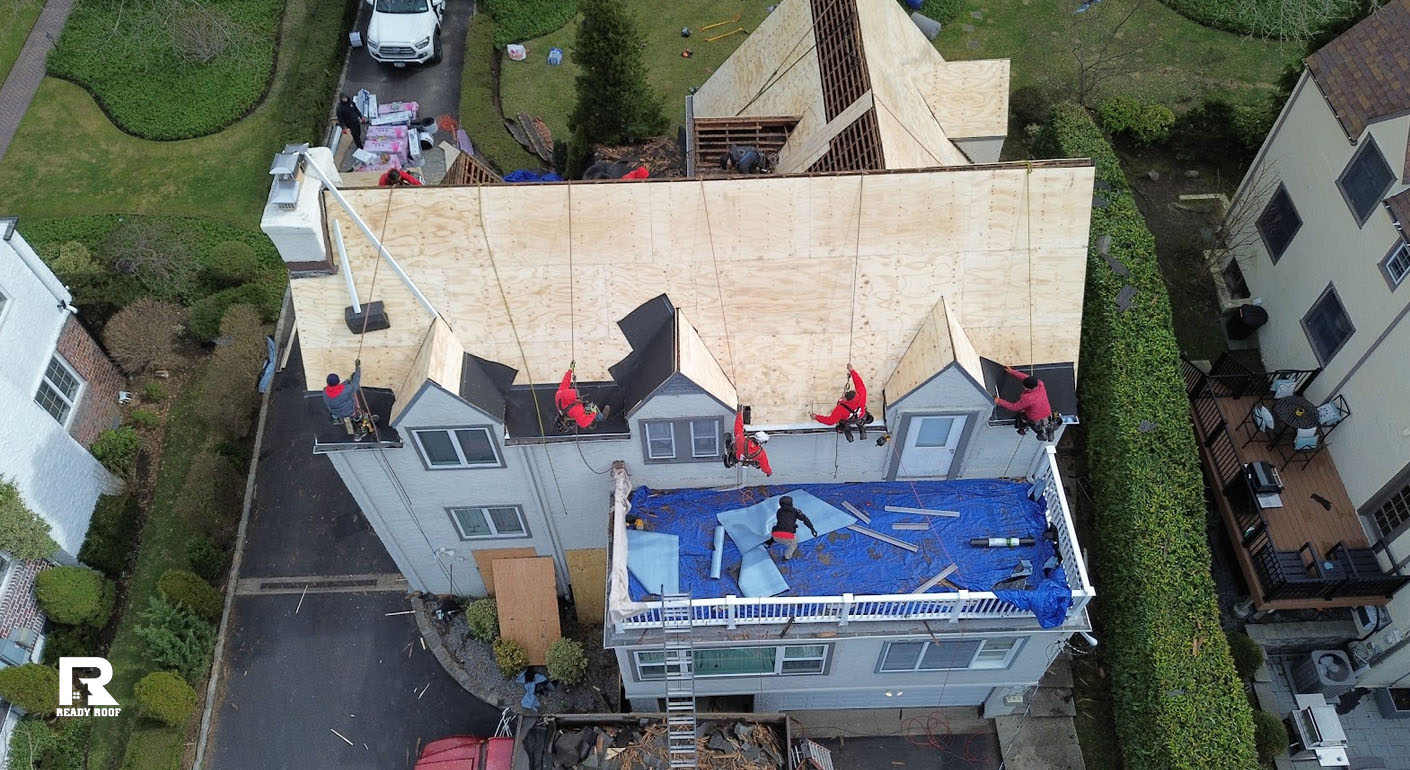
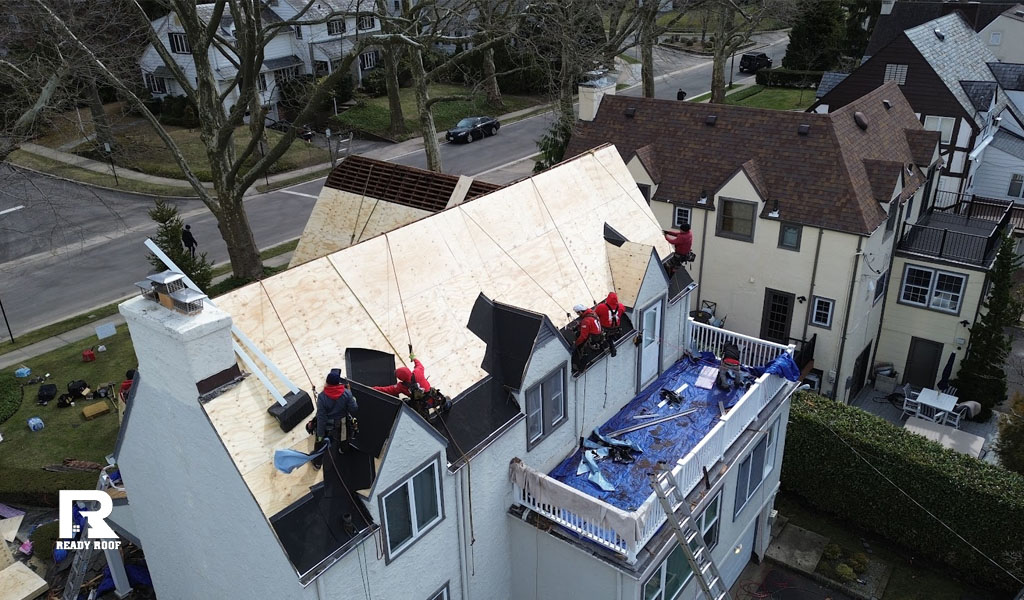
When decking damage is present, a full replacement is required to address it properly. The process involves removing all existing roofing material, replacing the damaged decking sections, installing new underlayment, and then completing the new roof installation from the substrate up. Ready Roof handles this complete process across Long Island, including the thorough pre-installation inspection that identifies exactly which decking sections need replacement so there are no surprises mid-project.
Situation 4: Severe or Repeated Storm Damage
Long Island homeowners are familiar with the aftermath of a major storm. After a nor’easter, hurricane remnant, or severe convective event, roofs across Nassau and Suffolk County regularly sustain damage ranging from a few lifted shingles to widespread structural compromise. The severity of that damage and the condition of the roof before the storm are both relevant to the replacement question.
A severe storm that causes significant damage to a roof that was already aging is often the event that makes the replacement decision straightforward. Insurance adjusters working storm claims regularly document damage that, in combination with the existing condition of the roof, supports a full replacement claim rather than a repair. If you are in this situation, having a thorough professional inspection and documentation completed before the insurance process begins is genuinely important. Ready Roof provides 24/7 emergency roof repair across Long Island and can respond quickly after storm events to assess damage, apply protective measures, and support your insurance documentation.
Repeated storm damage on the same roof is also a meaningful signal. A roof that has required significant repairs after each of the last two or three major weather events is not a roof that is holding up well under Long Island conditions. At some point, the cumulative repair investment starts to approach the cost of a replacement that would have addressed the underlying vulnerability from the start.
Situation 5: You Are Selling or Significantly Renovating the Property
The fifth situation that reliably answers the question of when you should replace your roof is a planned change in the property’s status. If you are preparing to list your Long Island home for sale, a roof that is aging, visibly deteriorated, or has a documented repair history is going to come up during the buyer’s inspection. It will either kill the deal, create a negotiated price reduction, or become a required condition of the sale. None of those outcomes is better than addressing the roof proactively before listing.
A new roof is one of the cleanest, most credible selling points a home can offer. Buyers understand what a roof replacement costs, and they respond to a property that has had that work done recently with quality materials by a licensed contractor. It removes a major objection before it can be raised, supports a stronger asking price, and shortens the time between listing and accepted offer. Real estate professionals across Long Island regularly recommend roof replacement to clients preparing to sell, and we work with those clients and their agents on timelines that fit the listing schedule.
Significant renovation projects are similarly relevant. If you are adding a second story, installing solar panels, or making major structural changes to your home, the condition of the existing roof needs to be evaluated as part of that planning process. Completing a major renovation and then having to tear into the newly finished work to replace a failing roof a few years later is an avoidable and expensive outcome. When the roof needs to come off anyway as part of a renovation sequence, that is the right time to replace it with materials and installation quality that will carry you for the next 25 to 30 years.
Get the roof you need now and pay over time. Explore financing plans that make major home repairs manageable
What a Quality Roof Replacement Actually Involves
Understanding what happens during a professional replacement helps you evaluate contractors and set realistic expectations for the project. A quality roof replacement is not simply a matter of putting new shingles over the old ones. It is a structured process that addresses the entire roofing system from the structural substrate up.
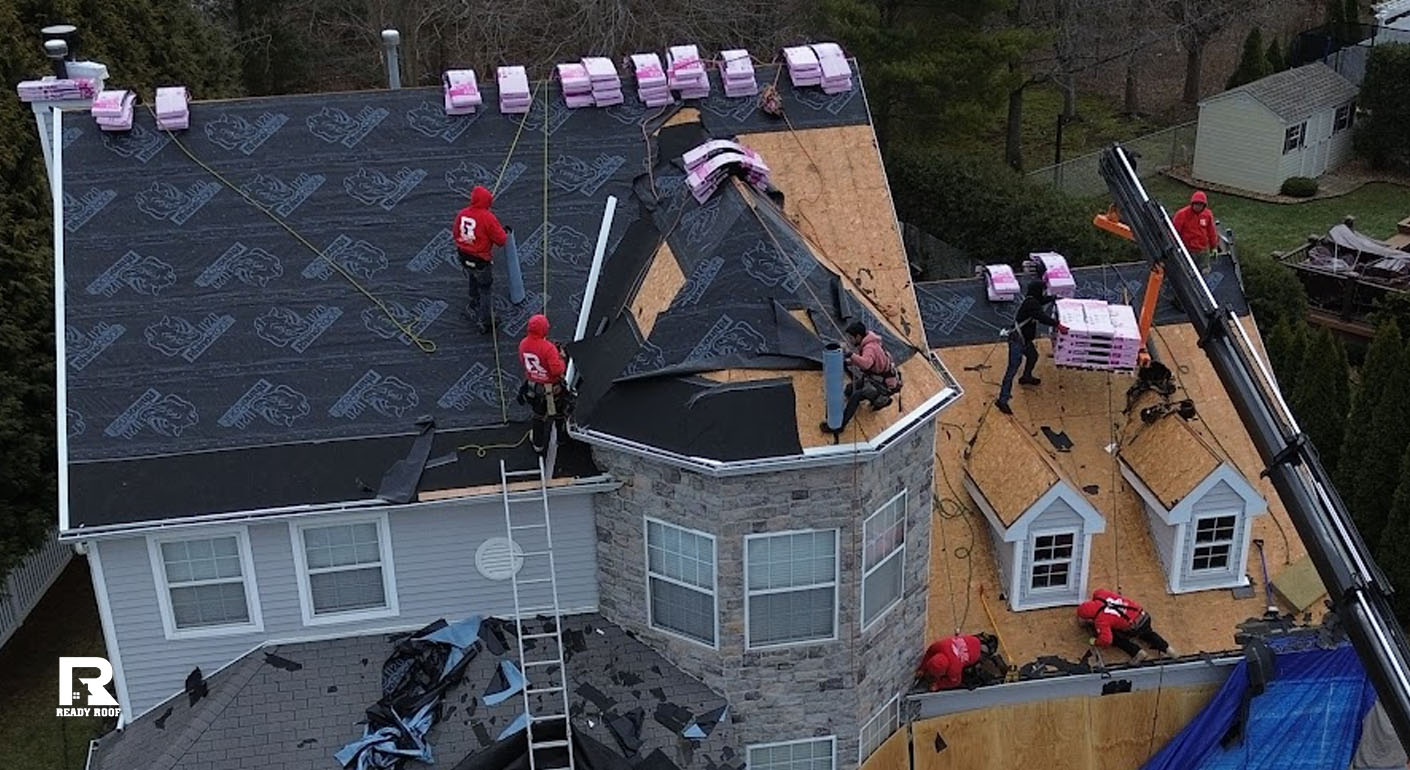
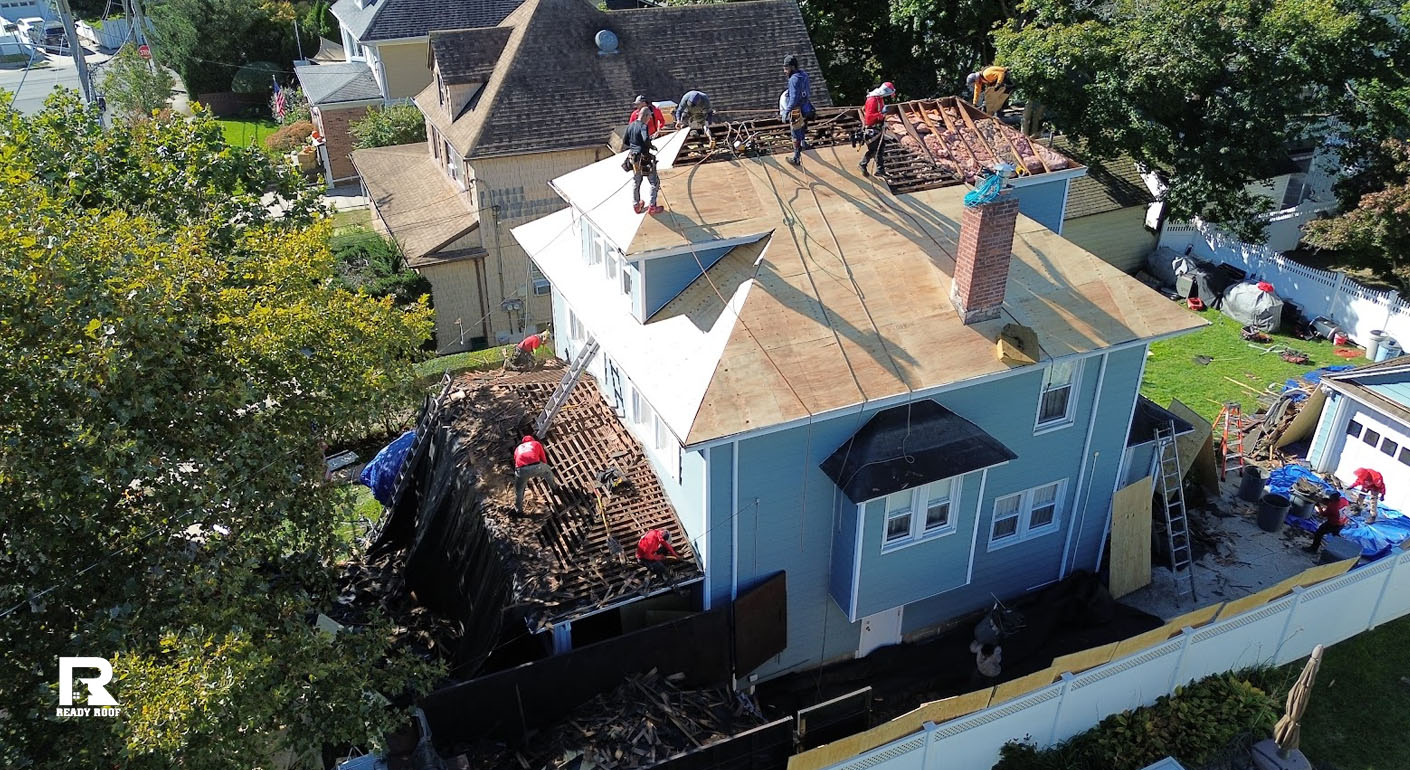
At Ready Roof, our replacement process begins with complete removal of all existing roofing material, including shingles, underlayment, and any compromised flashing. This exposes the decking for full inspection, which is where hidden damage gets identified and addressed before it is buried under new material. New underlayment is installed to provide a secondary moisture barrier beneath the shingles. All flashing, including the chimney flashing, step flashing at dormers and walls, and boot flashings around plumbing penetrations, is replaced with new material. Then the chosen shingles are installed with precision, starting at the eaves and working upward with proper overlap and fastening patterns. A final inspection covers alignment, fastening, flashing seal quality, and overall finish before we consider the project complete.
Material selection is part of that process as well. Ready Roof works with homeowners to select from asphalt shingles in a range of grades and styles, metal roofing for homeowners who want maximum longevity and wind resistance, and flat roof membrane systems for properties with low-slope sections. We consider your budget, your aesthetic preferences, and the specific demands of your property’s exposure and configuration to help you make a decision that serves you well for the full life of the new roof.
Frequently Asked Questions
What is the best time of year to replace a roof in the Northeast?
Roof replacement can be completed in any season in most conditions, but late spring through early fall tends to offer the most favorable working conditions in the Northeast. Moderate temperatures allow roofing materials to handle and install correctly, and the reduced precipitation probability compared to winter and early spring keeps the project timeline predictable. Fall installations are also common and practical for homeowners who want a new roof in place before winter weather arrives. Winter installations are possible but add complexity around material handling in cold temperatures and scheduling around weather events. If your situation is urgent, time of year should not prevent you from moving forward.
How long does a full roof replacement take to complete?
Most standard residential roof replacements on Long Island are completed in one to two days by an experienced crew. A typical single-family home with a straightforward roof configuration can be fully replaced in a single day. Larger homes, homes with complex roof geometries including multiple valleys, dormers, and steep pitches, or projects that uncover significant decking damage requiring replacement will take longer. The material selection can also affect the timeline. Asphalt shingle installations are generally faster than metal roofing or tile systems. Your contractor should provide a realistic project timeline during the estimate process so you know what to plan for.
How can I tell if my roof is leaking if I don’t see water inside my home?
Active interior leaks that produce visible water staining are the most obvious sign, but they are often not the first sign. Early-stage roof leaks frequently manifest in the attic before they become visible in the living space. Dark staining on attic sheathing, insulation that appears compressed or wet, or a musty smell in the upper levels of the home can all indicate moisture intrusion that has not yet made it through to the ceiling below. Outside the home, look for soft or spongy areas on the roof surface when walking it, dark staining on the roof exterior around penetrations or at valleys, and significant granule accumulation in gutters. Any of these signs warrants a professional inspection before the situation progresses to visible interior damage.
What roofing material offers the best wind resistance for coastal areas?
For coastal and near-coastal properties that face elevated wind exposure, the material choice and the installation quality both matter significantly. Standing seam metal roofing offers some of the best wind resistance ratings available in residential roofing, with properly installed systems rated to withstand winds well above 100 mph. Among asphalt shingle options, Class 4 impact-resistant architectural shingles with high wind ratings and a four-nail fastening pattern provide meaningfully better performance in high-wind events than standard three-tab shingles. For any coastal property, the flashing details, particularly at the eaves and rakes where wind uplift is most intense, are as important as the shingles themselves. Using a roofing contractor with specific experience in wind-resistant installation is worth prioritizing if your property has elevated exposure.
Does a new roof increase home value on Long Island?
A new roof has a well-documented positive effect on home value, though the precise return on investment varies by market, material choice, and how the replacement is positioned relative to a sale. National remodeling cost-versus-value studies consistently show asphalt shingle roof replacement recovering a significant portion of its cost at resale, with the percentage higher in markets where buyers are particularly sensitive to deferred maintenance concerns. On Long Island, where buyers are acutely aware of the costs associated with homeownership in a coastal climate, a recently replaced roof is a tangible differentiator that affects both the offer price and the speed of sale. Beyond the dollar impact, a new roof removes a major inspection concern and simplifies the transaction for both parties.
Getting Your Answer From a Team You Can Trust
When should you replace your roof is not a question that benefits from guesswork or from advice given by someone who has not actually seen your roof’s condition. The five situations covered in this article represent the clearest, most reliable signals that replacement is the right call, but every roof and every property is specific. The most confident answer always comes from a professional inspection that evaluates your roof’s actual condition, not from an age estimate or a general rule of thumb.
Ready Roof has been serving Long Island homeowners across Nassau and Suffolk County with the honest, accountable roofing service they deserve. Owner Ryan Coyne built this company on a three-generation foundation of craftsmanship, and every project we take on reflects that commitment to quality, transparent communication, and results that hold up over time. Whether you need a professional assessment to answer the replacement question, emergency repair after a storm, or a planned full replacement with premium materials and financing options to fit your budget, we are here and ready.
Contact Ready Roof today at (631) 892-9165 or visit readyroofli.com to schedule your inspection. The sooner you have a clear picture of your roof’s condition, the more options you have, and the better positioned you are to make the right decision for your home and your family.